Leave Your Message

What Are the Top Countertop Basin Types in 2026?

A bathroom basin is more than a place to wash your hands. Its height, rim, and installation style affect daily comfort, splash control, and the space left around the faucet. The Countertop Basin stands out for its visible bowl and broad choice of shapes, but it is not automatically the best fit. A vessel basin can add a sculptural focal point. An undermount basin keeps the counter easier to wipe. Drop-in, semi-recessed, and integrated designs each solve different layout problems.

Industry reports help explain why these choices matter. Houzz’s 2024 U.S. Bathroom Trends Study tracks homeowners’ renovation decisions, while NKBA’s 2024 Bath Trends Report surveys professional views on bathroom design. Together, they provide useful context on changing priorities, though neither report ranks basin types for every household. That matters. A trend is not a performance test, and survey results cannot predict how a particular basin will work in a small bathroom. A ranking can still mislead.

This guide compares the leading countertop basin types for 2026 by installation, appearance, cleaning, and practical fit. It also considers counter depth, faucet reach, and the raised rim that may send water onto nearby surfaces. Those details are easy to overlook in a product photo. We will separate proven advantages from style claims, while noting where the evidence is limited. The right choice should look good, feel comfortable, and suit the room you actually use.
What Are the Top Countertop Basin Types in 2026?

How Countertop Basins Differ from Other Basin Styles

What Are the Top Countertop Basin Types in 2026?

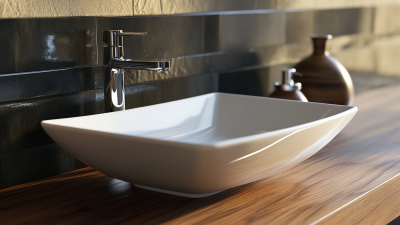
A countertop basin rests on or partly within the bathroom counter. Its rim and bowl remain visible, unlike an undermount basin, which sits beneath the surface. Vessel-style models stand fully above the counter; semi-recessed designs extend over its edge. That changes the feel. The raised bowl can make a vanity look more sculptural, while also affecting how much usable counter space remains.

Other basin styles make different trade-offs. A drop-in basin has a rim that rests on the counter, but most of its bowl sits below it. Wall-mounted and pedestal basins do not rely on a vanity top in the same way, so they can suit compact rooms. Countertop models usually need a suitable counter, a compatible tap height, and enough clearance beneath the bowl. Measure before choosing. A tap that is too low can make handwashing awkward.

Daily use matters as much as appearance. The outer surface of a vessel basin may need more frequent wiping, especially where water collects around its base. Check the basin’s depth, drain position, and cleaning instructions before buying. A shallow bowl can splash; a tall one may feel imposing. It is easy to focus on the shape and overlook the reach from tap to bowl. That small oversight can become annoying every morning.
Which Countertop Basin Types Stand Out in 2026?

Which Countertop Basin Types Stand Out in 2026?

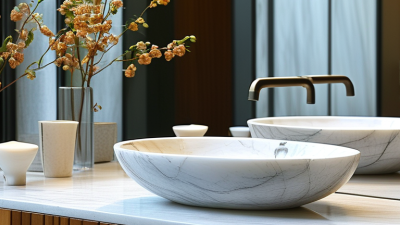
Vessel basins remain a striking choice for bathrooms where the basin should be visible. Their raised bowls create a sculptural focal point, especially in stone or ceramic, but they can splash more and need a faucet with suitable reach. Integrated countertop basins offer a quieter look. With fewer joints around the bowl, they are easier to wipe clean, though repairs may be less simple if the surface is damaged. No perfect type exists.

The NKBA’s 2025 Bath Trends Report highlights continued interest in personalized, wellness-focused bathrooms, supporting choices that balance appearance with everyday use. For a compact room, an undermount basin can preserve counter space and keep the rim clear; a semi-recessed model can work when the vanity is shallow. Faucet choice matters, too. The U.S. EPA sets a maximum flow rate of 1.5 gallons per minute for WaterSense-labeled bathroom faucets, compared with 2.2 gallons per minute for the federal standard. That figure does not decide basin style, but it is useful when planning the whole wash area. Measure the bowl depth and faucet reach before buying. A beautiful basin can still feel awkward at the sink.

What Are the Top Countertop Basin Types in 2026?

A comparison of common basin styles by where they sit in relation to the countertop.

Vessel basins sit above the counter; drop-in basins rest by their rim on it; semi-recessed basins are partly set into it; and undermount basins are installed below it. The scale describes installation position, not popularity or market share.

How Shapes and Materials Affect Basin Performance

What Are the Top Countertop Basin Types in 2026?
How Shapes and Materials Affect Basin Performance

Countertop basins commonly come as vessel, semi-recessed, or integrated designs. Shape affects daily use, not just appearance. A deep, gently curved bowl generally contains splashes better than a shallow, flat-bottomed one. Rectangular basins offer useful corner space, but tight corners can collect residue. Small detail. Not trivial. Match basin depth with faucet reach, and test the water stream before installation.

Material matters just as much. Vitreous china has a smooth, low-porosity surface that is easy to clean, though a hard impact can chip it. Natural stone feels substantial, but some types need periodic sealing and may show mineral deposits. Glass makes water marks conspicuous. Solid-surface materials may be repairable, but care and repair methods vary. Ask for surface specifications and cleaning guidance, not just a finish sample.

Faucet flow also influences splash and water use. The U.S. EPA’s WaterSense Bathroom Faucets specification sets a maximum flow of 1.5 gallons per minute for labeled faucets, compared with 2.2 gallons per minute for standard faucets. This is a faucet benchmark, not a basin test. Still, a high-mounted spout over a shallow vessel can splash even at efficient flow. I think shoppers often underestimate that mismatch. Check basin dimensions, drain position, faucet height, and cleaning access together.

What Are the Top Countertop Basin Types in 2026? - How Shapes and Materials Affect Basin Performance

Comparison of common basin styles, their typical forms, material options, and practical performance considerations.
Basin Type Common Shapes Typical Size or Profile Common Materials How Shape Affects Performance Practical Advantages Planning Considerations
Vessel Basin Round, oval, square, rectangular, or softly asymmetrical Often about 14–20 in (35–51 cm) across; the bowl sits above the countertop. Vitreous china, ceramic, glass, natural stone, or solid surface A deeper bowl can help contain splashes, while a shallow bowl may allow more splashing. Rounded interiors generally make water easier to rinse toward the drain. Creates a visible focal point and can be replaced without removing the entire countertop. Check faucet height and reach, countertop support, bowl height, and splash clearance. Stone and glass surfaces may need specific cleaning care.
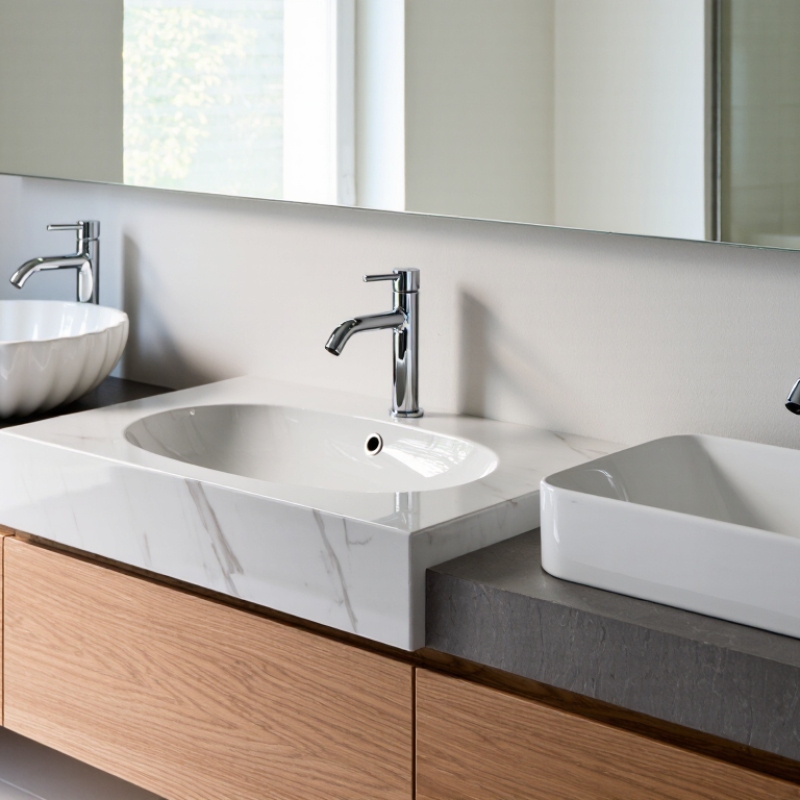
Semi-Recessed Basin Usually oval or rectangular, with a front edge that projects beyond the vanity Part of the basin sits in the countertop; the front rim extends over the cabinet face. Vitreous china, ceramic, or solid surface The forward projection can make the bowl easier to reach, particularly where the vanity is shallow. Bowl depth and rim shape influence splash control. Can provide a usable basin where full-depth countertop space is limited. Allow for the projecting edge and check that cabinet doors, drawers, and walkways have adequate clearance.
Inset or Drop-In Basin Round, oval, square, or rectangular, generally with a visible rim Installed through a countertop cutout; the rim rests on top of the counter. Vitreous china, ceramic, stainless steel, or composite materials A broad rim helps cover the cutout. Bowl width and depth determine usable washing space; rounded corners are generally easier to clean than tight corners. Works with many countertop materials and is typically straightforward to install or replace. Seal the rim-to-counter joint correctly and clean around the rim to limit residue buildup.
Undermount Basin Most often oval or rectangular, with the rim concealed beneath the countertop Mounted below a compatible countertop; the countertop edge remains exposed around the opening. Vitreous china, ceramic, stainless steel, or solid surface A smooth transition lets water and crumbs be wiped from the counter into the bowl. A rectangular bowl may offer more flat-bottomed space, while curved corners can be easier to clean. Provides an uncluttered countertop edge and makes surface cleanup convenient. Requires a countertop suitable for an exposed cut edge and secure basin support. Confirm the installation method with the countertop fabricator.
Integrated Basin Usually rectangular or gently curved, formed as part of a continuous counter surface Basin and countertop are made as one unit or joined with a seamless-looking transition. Solid surface, cultured materials, or other manufacturer-specified materials A continuous surface has few joints where grime can collect. Basin slope and drain placement affect how completely water clears. Easy-to-wipe transitions and a coordinated appearance; some solid-surface products can be repaired if scratched. Confirm repair options, heat and chemical resistance, and replacement availability for the specific material.

Material and sizing note: Typical dimensions and performance vary by design. Vitreous china and ceramic are nonporous when their glaze is intact; natural stone may require material-appropriate sealing and care. Always check the basin’s installation instructions, cutout dimensions, and cleaning guidance before purchase.

How to Compare Countertop Basins for Different Bathrooms

What Are the Top Countertop Basin Types in 2026?

How to Compare Countertop Basins for Different Bathrooms

Choosing a countertop basin is less about appearance alone than how it fits daily routines. Vessel basins sit above the counter and make a strong visual feature, but their height can feel awkward in a compact bathroom. Measure the basin and faucet together. A tall spout may splash against a shallow bowl. Small detail, big difference.

For family bathrooms, compare bowl depth, cleaning access, and counter space. Semi-recessed basins extend beyond the vanity, which can help when the counter is narrow. Integrated countertop basins create a smooth surface that is easy to wipe, though replacing the whole top may be less convenient. Undermount styles leave more counter visible, but need a compatible surface and careful installation. Check the tap position before choosing.

In a guest bathroom, a smaller vessel basin can free up visual space, while a deep bowl may better contain splashes. For wheelchair-accessible or shared bathrooms, consider knee clearance, reachable taps, and a comfortable rim height. These details are easy to overlook in a showroom. I would also check the bowl dimensions against the room’s door swing; measurements can look fine on paper, then feel tight in use. Compare the basin with the vanity, faucet, and plumbing as one setup, not as separate purchases.

What to Check Before Choosing a Countertop Basin

Before choosing a countertop basin, measure the usable counter depth, not just its overall width. A vessel basin can look sculptural, but its raised rim may leave little room beneath a mirror or wall cabinet. Check the finished rim height, faucet reach, and drain position together. A tap that falls short can splash water onto the counter. Semi-recessed basins suit tighter spaces, while integrated designs reduce joints where grime can collect. Small details matter.

Confirm the countertop can support the basin and tolerate water around its cutout. Ask the installer how the edge will be sealed; I would not assume every stone or wood surface behaves alike. Houzz’s 2024 U.S. Bathroom Trends Study reported a median spend of $15,000 for major bathroom remodels, a useful reminder that replacing a poorly fitted basin can become an expensive correction. Check whether the basin includes an overflow, and match the waste fitting to that design. Also test the faucet choice against water-use needs: the U.S. EPA’s WaterSense specification caps certified bathroom faucets at 1.5 gallons per minute, at least 30% below the federal 2.2-gallon standard. Measure twice. A beautiful basin can still be awkward to clean.