What makes the best Aluminium Vanity for 2026? It is more than a sleek finish or a fashionable color. A good choice should suit the room, handle daily bathroom use, and make cleaning straightforward. Industrial designer Dieter Rams’s principle, “Good design is as little design as possible,” offers a useful lens: prioritize practical details over decoration. It is a design principle, not a product guarantee.
Look closely at the frame, drawer joints, hinges, and finish. Ask the seller what corrosion-resistance testing the surface has undergone, and check the care instructions before buying. Aluminum itself can develop an oxide layer, but finish quality and construction still matter in a damp room. Details matter. A smooth drawer is welcome; a drawer that sags after repeated use is not. Compare the vanity’s width and depth with your plumbing, door swing, and available floor space. Measure carefully.
This guide examines what “best” means for different bathrooms, budgets, and routines. It considers storage, installation, finish durability, maintenance, and the value of clear warranty terms. Product claims can sound convincing, yet specifications and service support deserve equal attention. A compact model may suit a guest bathroom, while a family space may need deeper drawers and sturdier hardware. No single design fits everyone. The right Aluminium Vanity is the one whose materials, dimensions, and features match your real needs—not just the showroom display.
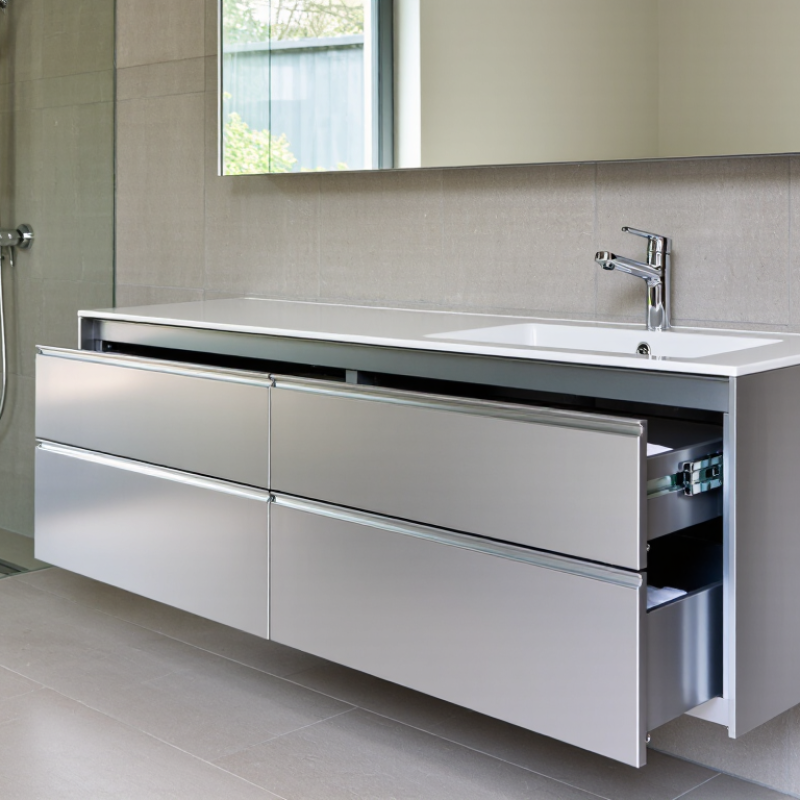
In 2026, an aluminium vanity is defined by more than a metal cabinet. It combines a corrosion-resistant frame with practical storage, a stable countertop, and finishes suited to daily bathroom use. Look for sealed edges, smooth drawer movement, and joins that do not trap water. Details matter. A thin coating may look refined in a showroom but can scratch or wear around handles.
Good design balances moisture resistance with comfort. Aluminium does not absorb water like some wood-based materials, but hinges, screws, and drawer runners still need careful construction. Check how doors close and whether the interior is easy to wipe clean. A vanity with raised legs can make floor cleaning simpler, while wall-mounted models open up visible floor space. Measure plumbing and door clearance before choosing a size.
The material also has trade-offs. Some finishes show fingerprints or water spots, and metal surfaces can feel cool beside warmer tile or wood. That is not necessarily a flaw, but it may affect the room’s overall feel. Ask about the frame’s thickness, finish process, and replacement hardware rather than relying on the word “aluminium” alone. A simple cabinet with sound joints may serve better than a feature-heavy design with poorly finished edges.

Aluminium vanities come in wall-mounted and floor-standing forms, each solving a different bathroom problem. A floating unit leaves more visible floor space and makes cleaning easier. It needs secure wall support, especially when drawers hold heavy bottles. A floor-standing vanity rests on the floor and can hide pipework behind a plinth. It may suit older bathrooms where wall reinforcement is uncertain. Measure the plumbing position before choosing either style.
Basin layouts range from compact single-basin units to wider double-basin designs. A small powder room may need only a narrow cabinet with one shallow drawer. Larger bathrooms can accommodate two basins, though the extra width may restrict movement around the room. Integrated basins create a continuous surface that is simple to wipe. Vessel basins sit above the counter and add visual depth, but their taller profile can feel awkward for children. Details matter.
Storage configurations include full-width drawers, hinged doors, open shelves, or mixed layouts. Deep drawers fit folded towels, while a top drawer with a U-shaped cutout can work around the drain. Some units pair with mirrored cabinets or side storage towers. Aluminium resists bathroom moisture better than many untreated materials, but finishes and joints still need care. I would check drawer runners, edge seals, and the available clearance before settling on a configuration. A sleek appearance is not always practical.
| Vanity type or configuration | Typical width | Typical depth | Common layout | Best suited to | Key points to check |
|---|---|---|---|---|---|
| Compact single-basin vanity | 400–600 mm | 300–450 mm | One basin; one or two doors, or a small drawer | Powder rooms, small bathrooms, and narrow spaces | Confirm basin and tap dimensions, door clearance, and plumbing access. |
| Standard single-basin vanity | 600–900 mm | 400–500 mm | One basin with drawers, doors, or a combination | Most small-to-medium bathrooms | Check drawer cut-outs around the waste trap and the usable internal storage. |
| Wide single-basin vanity | 900–1200 mm | 450–550 mm | One basin with extended counter space and larger storage sections | Bathrooms needing extra counter space without a second basin | Verify that the basin position matches the water supply and drain locations. |
| Double-basin vanity | 1200–1800 mm | 450–550 mm | Two basins, usually with separate storage areas | Shared bathrooms with sufficient wall and floor space | Allow adequate spacing between basins and confirm there is plumbing for both. |
| Wall-mounted (floating) vanity | 600–1200 mm | 350–500 mm | Cabinet fixed to the wall, with floor space visible below | Contemporary bathrooms and easier floor cleaning | Check wall structure, fixing points, rated load, and the required mounting height. |
| Floor-standing vanity | 600–1200 mm | 400–550 mm | Cabinet supported by legs or a base plinth | Bathrooms where wall fixing is difficult or extra enclosed storage is preferred | Check floor level, base clearance, and access for cleaning and plumbing. |
| Corner vanity | Approximately 500–800 mm per side | Varies by corner design | Compact cabinet and basin positioned to fit a bathroom corner | Small or unusually shaped bathrooms | Measure both walls, door swing, and basin projection before selecting a unit. |
| Integrated-top vanity | Commonly 600–1200 mm | Commonly 400–550 mm | Basin formed as part of, or fitted closely into, the countertop | A streamlined setup with fewer countertop joints | Confirm the top material, basin position, tap-hole arrangement, and replacement options. |
| Aluminium frame with panel construction | Available in compact to double-basin widths | Depends on the cabinet design | Aluminium frame or carcass combined with cabinet panels and a separate top | Buyers comparing different panel finishes and countertop materials | Ask what the panels are made of and how exposed edges, joints, and hardware are protected. |
Typical dimensions are indicative, not universal standards. Measure the available space, plumbing positions, basin, and door clearance before ordering. Aluminium can resist corrosion, but finish quality, installation, ventilation, and regular care affect long-term performance.
An aluminium vanity can suit a humid bathroom, but the material alone does not guarantee durability. Ask about panel thickness, frame joints, and sealed edges. Thin panels may flex under a heavy basin, while weak joints can loosen with repeated drawer use. Open and close the drawers. Check for wobble.
The finish affects both maintenance and appearance. Anodized or powder-coated surfaces add protection, but they are not immune to chips or scratches. Inspect cutouts, handles, and sink openings, where water can linger. Matte finishes may disguise fingerprints, though soap marks can still show. Small details matter. A showroom sample under bright lights may look different at home, so consider your bathroom’s lighting too.
Storage should match daily habits. Deep drawers can hold towels, but plumbing may limit usable space beneath the basin. Check drawer clearance before choosing a layout. Installation matters just as much: the wall must support the vanity, and plumbing connections should align without forcing the cabinet into place. Measure carefully. Even a well-made unit can sit poorly on an uneven wall. Ask the installer to check level, fixing points, and access for future repairs.
An aluminium vanity can suit a humid bathroom, but the best choice depends on the room around it. Measure the wall, door swing, and plumbing before comparing models. In a narrow ensuite, a shallow cabinet may keep the walkway clear. In a family bathroom, deeper drawers can hold towels and daily supplies. Small details matter.
Check how the cabinet is built, not just how it looks. Smooth, sealed edges help limit water getting into joints, while sturdy drawer runners make frequent use easier. Look for a finish that wipes clean without special products. Ask how the vanity should be fixed to the wall, especially if the wall is uneven or the unit will carry a heavy basin. Installation can change the final cost.
Think about daily habits, too. A vessel basin may look striking, yet it can leave less usable counter space. Integrated basins are often easier to wipe after shaving or brushing teeth. For a shared bathroom, separate drawers can reduce clutter. For a guest room, a compact cabinet may be enough. I would still check sample finishes in the actual lighting; screen images can be misleading. Choose dimensions and storage first, then compare appearance.
Typical vanity widths can help narrow your options by bathroom type. These are common size choices, not fixed rules.
Compact powder rooms often suit a 24-inch vanity, while larger bathrooms may accommodate 48- or 60-inch models. Before choosing, measure the available wall space and check door swing, plumbing position, and clearance around the vanity. Aluminium is valued for its resistance to moisture, but finish and construction quality also matter.
Choosing an aluminium vanity starts with the room, not the finish. Measure the wall, plumbing points, and door clearance before comparing sizes. A compact floating unit can free up visible floor space, while a floor-standing cabinet may offer more storage. Check the drawer depth and hinge movement in person if possible. Small fittings can feel awkward when wet.
Look for corrosion-resistant construction and a smooth, even finish, especially around edges and joints. Ask how the cabinet handles bathroom humidity, and inspect the sink-to-counter seal. A vanity that looks sturdy in a photo may feel less practical when its drawers barely fit everyday items. I would also check whether replacement handles or adjustable feet are available; these details are easy to overlook.
Tips: Wipe splashes with a soft cloth, then dry the edges. Use mild soap for routine cleaning. Avoid abrasive pads, which may dull the surface. Check seals and fittings every few months, and tighten loose hardware gently. Don’t overfill drawers; that can strain their runners.