China Top 10 Smart Toilet Manufacturers for Global Buyers introduces suppliers shaping a rapidly changing bathroom market. These companies combine bidet functions, heated seats, deodorization, sensor flushing, night lighting, and remote controls. However, impressive features alone do not guarantee dependable products.
A practical buying decision requires more than a polished showroom. Global buyers should examine factory experience, production capacity, quality-control records, export history, and after-sales support. Certifications must match the destination market. Water pressure, voltage, drainage design, and installation habits also vary widely.
Bill Strang, former president of TOTO USA, expressed a useful principle: “Technology matters when it improves everyday life.” That idea remains relevant. A Smart Toilet should open smoothly, flush consistently, clean comfortably, and remain understandable after installation. Small details matter. A noisy pump can damage user trust. A confusing mobile application can weaken an otherwise excellent product.
This guide evaluates leading manufacturers through practical commercial criteria. It considers OEM and private-label flexibility, material quality, intelligent functions, software stability, spare-part access, and warranty responsiveness. It also looks beyond marketing claims, including production evidence and realistic buyer risks.
The ranking is not an absolute verdict. Supplier performance can change by model, factory, region, and contract terms. Some manufacturers have strong hardware but limited international service. Others offer attractive customization but need closer inspection. That is where buyers should remain cautious.
The following selection is designed to support clearer supplier comparisons, better factory conversations, and more informed purchasing decisions. Because in this industry, the smartest choice is not always the most feature-heavy one.
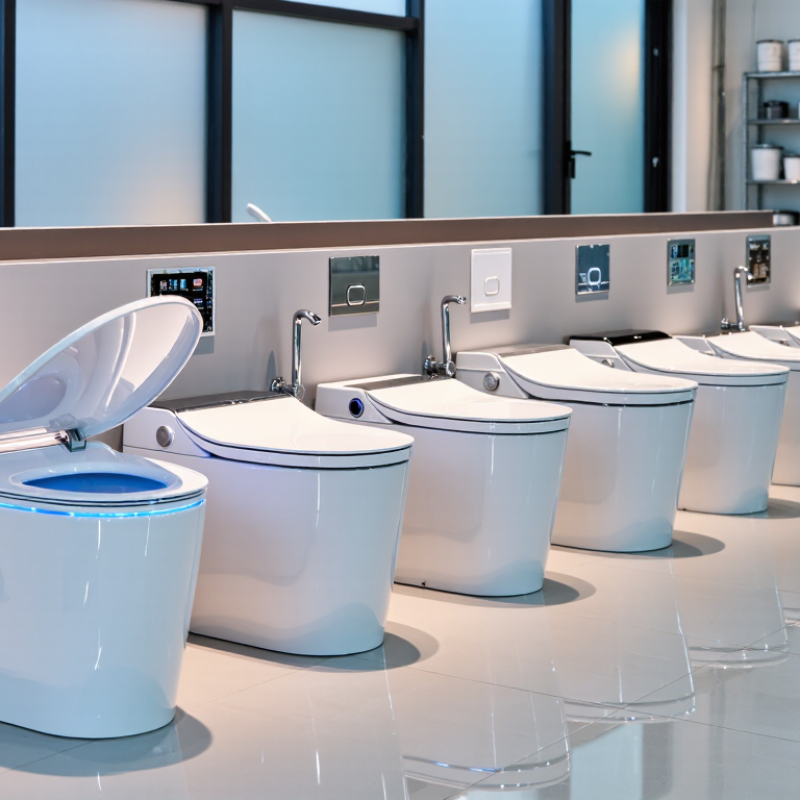
China Top 10 Smart Toilet Manufacturers for Global Buyers
China has become a major production base for smart toilets, supported by mature ceramic, electronics, heating, and injection-molding supply chains. Grand View Research estimates the global smart toilet market reached about USD 8.3 billion in 2023. It projects a 12.8% compound annual growth rate from 2024 to 2030. These figures include different product categories, so comparisons are not perfectly consistent.
China’s manufacturing strength is practical rather than purely technological. Factories commonly integrate heated seats, bidet washing, warm-air drying, deodorization, night lighting, and water-saving controls. The China Household Electrical Appliances Association reports continued growth in intelligent bathroom appliances, driven by urban renovation and aging-friendly home upgrades. Export-oriented factories also provide customized voltage, language, packaging, and certification support for overseas buyers. Details matter.
Global relevance extends beyond lower production costs. Chinese suppliers increasingly use automated glazing, electronic testing, leak inspection, and full-unit aging tests. These processes can improve consistency across large orders. However, quality still varies between factories. A polished showroom does not prove long-term reliability. Buyers should examine test records, spare-part planning, water-pressure performance, and after-sales response times. Mordor Intelligence identifies Asia-Pacific as the fastest-growing regional market, but its market estimates differ from other reports because product definitions vary. That uncertainty deserves attention.
China is a major global manufacturing and export hub for sanitary ware and bathroom appliances. The indicators below show the broader manufacturing conditions that support smart toilet production, including industrial scale, export strength, digital connectivity, and urban consumer reach.
Sources: National Bureau of Statistics of China, Ministry of Industry and Information Technology, World Trade Organization, and China Internet Network Information Center. Figures are rounded and represent widely reported national-level indicators for 2023.
China Top 10 Smart Toilet Manufacturers for Global Buyers
Key Criteria for Evaluating Chinese Smart Toilet Manufacturers
A reliable evaluation starts with factory evidence, not polished catalogs. Fortune Business Insights estimates the global smart toilet market at USD 8.87 billion in 2023, with growth toward USD 14.27 billion by 2032. This expansion increases supplier choice, but also exposes uneven quality. Ask for ISO 9001 records, production-line photographs, and recent third-party inspection reports. Confirm whether the factory manufactures core components or only assembles imported parts.
Safety and after-sales support deserve equal attention. Intertek’s testing guidance for bathroom electrical products highlights risks involving water protection, insulation, grounding, and abnormal operation. Request test reports for each electrical configuration, not a generic certificate. Check IP ratings, leakage protection, heating-element durability, and spare-part availability. A five-year parts plan is more useful than a long warranty promise.
Look beyond the lowest quotation. Mordor Intelligence identifies Asia-Pacific as a major growth region for smart bathroom products, suggesting stronger competition and faster product iteration. Evaluate annual defect rates, shipment consistency, software-update procedures, and packaging tests. Ask for samples from regular production, not showroom units. Small details matter: loose hinge covers, slow water recovery, or unclear installation diagrams can create expensive claims. Some buyers overlook local voltage differences. That mistake is avoidable. Manufacturer answers may still be incomplete, and factory audits can miss seasonal labor changes. Treat every score as evidence, not certainty.
Choosing among China’s top 10 smart toilet manufacturers requires more than comparing prices. International buyers should inspect production experience, engineering capacity, and export records. A reliable factory can explain ceramic grades, water pressure requirements, heating systems, and software functions in clear technical language.
During factory evaluations, request live product demonstrations. Check seat stability, nozzle movement, drying temperature, flushing noise, and emergency manual operation. Details matter. Ask for material samples, inspection reports, packaging photographs, and spare-parts lists. Manufacturers serving overseas markets should understand destination electrical requirements and recognized plumbing standards. They should also provide installation drawings that local contractors can actually use.
Communication often reveals operational quality. Does the sales team answer technical questions directly? Can the factory support multilingual manuals, replacement parts, and warranty procedures? A factory visit or independent inspection may expose differences between showroom quality and mass production. This step can feel slow, but it prevents expensive surprises. Not every attractive catalog reflects consistent output. Some suppliers also rely heavily on outsourced components, which may affect repair speed and product control.
Buyers should compare the top ten candidates through the same checklist. Review production capacity, quality-control stages, lead times, customization limits, and container loading methods. A thoughtful supplier will discuss weaknesses as well as strengths. That honesty is useful. Still, buyers should verify every important claim through samples, documents, and trial orders before making a larger commitment.
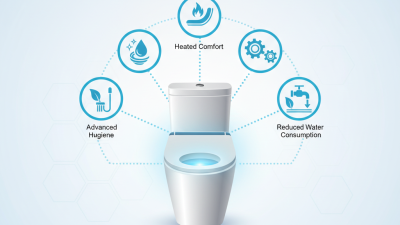
For global buyers, comparing smart toilet manufacturers requires more than checking prices and glossy images. Examine heated seats, adjustable bidet pressure, warm-air drying, deodorization, night lighting, and automatic flushing. Ask whether each function works reliably after repeated use. Request water-consumption data and voltage options for your destination market. Small details matter.
Certifications should match the sales region and product design. Look for applicable electrical safety reports, CE documentation for European distribution, RoHS declarations, and EMC testing where required. ISO 9001 may indicate a controlled quality system, but it does not guarantee every unit is perfect. Review factory audit records, sample test results, and production inspection procedures. A polished brochure is not proof. Export experience also deserves close attention. Reliable suppliers provide multilingual manuals, protective packaging, spare parts, clear warranty terms, and accurate shipping documents. They should understand container loading and local installation conditions.
Tips: Request a working sample before placing a large order. Test flushing, spray temperature, sensor response, and leakage after several cycles. Confirm plug type and frequency in writing. Ask for carton dimensions and replacement-part availability. One detail is often missed: installation support. Video guidance helps, but local technicians may still need clearer diagrams. Compare response times during pre-sale communication; slow replies can become costly after shipment. I would also inspect packaging personally when possible, because minor transport damage can erase an attractive factory price.
| Supplier Profile | Primary Product Range | Core Product Features | Typical Power / Voltage | Water Efficiency | Certification Availability | OEM / ODM Capability | Export Capability | Typical MOQ | Best Fit for Buyers |
|---|---|---|---|---|---|---|---|---|---|
| Manufacturer 01 | Integrated smart toilets; wall-hung and floor-mounted models | Rear and feminine wash, heated seat, warm-air drying, deodorization, night light, remote control | 220–240 V, 50/60 Hz; approximately 1,200–1,600 W | Dual-flush systems commonly rated at 3/6 L or 3/4.8 L | CE, RoHS, EMC and water-contact documentation available by model | Private labeling, control-panel customization, packaging and firmware options | Container export experience; supports 110 V and 220 V regional versions | Usually 20–50 units for standard models; confirmed per project | Distributors and residential renovation projects |
| Manufacturer 02 | Entry-level integrated toilets and electronic bidet seats | Basic cleansing, adjustable water temperature, heated seat, soft-close lid, manual side control | 220–240 V, 50/60 Hz; approximately 900–1,300 W | Commonly 3/6 L dual flush for integrated toilet models | CE and RoHS commonly offered; local approvals require buyer verification | Logo printing, carton design and selected color changes | Suitable for mixed-container shipments and trial orders | Usually 10–30 units for catalog products | Online sellers and cost-sensitive importers |
| Manufacturer 03 | Premium all-in-one smart toilets with concealed plumbing options | Automatic lid, occupancy sensor, instant heating, UV or nozzle sanitation on selected models, memory settings | 220–240 V, 50/60 Hz; approximately 1,500–1,800 W | 3/6 L or 3/4.8 L flush configurations depending on ceramic platform | CE, EMC, RoHS and test reports available for applicable SKUs | Full OEM packaging, user interface, remote control and mold-development support | Supports project quotation, palletized loading and private-label documentation | Typically 30–100 units depending on customization | Hotels, property developers and premium bathroom retailers |
| Manufacturer 04 | Electronic bidet seats and retrofit washlet systems | Adjustable spray position, oscillating wash, heated seat, warm-air dryer, self-cleaning nozzle | 110–120 V or 220–240 V; approximately 800–1,400 W | Uses existing toilet bowl; water consumption commonly below 1 L per wash cycle | CE, RoHS and electrical safety reports available by voltage version | Seat shape, control labels, packaging and plug configuration customization | Compact cartons suitable for parcel, pallet and container export | Often 50–100 units for standard seat models | Retailers targeting retrofit installations |
| Manufacturer 05 | Commercial-grade smart toilets for hospitality and public facilities | Durable ceramic body, sensor activation, antibacterial seat materials, simplified service access | 220–240 V, 50/60 Hz; approximately 1,200–1,700 W | Typically 3/6 L dual flush; project specifications may vary | CE, EMC, RoHS and factory quality-control records available for export orders | Project-specific engineering, mounting adjustments and service-parts planning | Experienced with tenders, container planning and installation documentation | Usually 50–200 units for project orders | Hotels, serviced apartments and commercial developments |
| Manufacturer 06 | Minimalist integrated toilets with concealed tank compatibility | Remote control, adjustable rinse pressure, heated seat, deodorizing filter, power-saving mode | 220–240 V, 50/60 Hz; approximately 1,000–1,500 W | 3/4.8 L or 3/6 L dual-flush options | CE and RoHS commonly available; plumbing approvals depend on destination market | Custom colors, logo application, carton artwork and accessory bundles | Supports distributor programs and mixed model containers | Commonly 20–60 units for standard products | Bathroom showrooms and design-led residential projects |
| Manufacturer 07 | Smart toilets with mobile-app or smart-home integration options | Preset wash programs, user memory, automatic flushing, LED night light and optional connectivity | 220–240 V, 50/60 Hz; approximately 1,300–1,800 W | Typically 3/6 L dual flush; sensor flushing may be configurable | CE, RED or EMC documentation may apply to connected versions; confirm SKU scope | App branding, language localization, remote design and software integration support | Suitable for private-label programs requiring multilingual materials | Usually 50–150 units for customized programs | Smart-home distributors and technology-focused retailers |
| Manufacturer 08 | Compact smart toilets for apartments and small bathrooms | Compact projection, instant water heating, heated seat, side-panel controls and soft-close cover | 220–240 V, 50/60 Hz; approximately 900–1,300 W | 3/4.8 L dual flush commonly specified | CE and RoHS available for selected export models | Basic logo, color, plug, carton and instruction-manual customization | Efficient for small and mixed shipments; standard export packing available | Often 10–30 units for stock models | Apartment projects and compact-bathroom retailers |
| Manufacturer 09 | High-end ceramic smart toilets and coordinated bathroom collections | Premium glaze, concealed wiring, warm-water wash, deodorization, automatic lid and coordinated accessories | 220–240 V, 50/60 Hz; approximately 1,400–1,800 W | 3/6 L or 3/4.8 L depending on ceramic design | CE, RoHS, EMC and material test documentation available by product line | Collection development, custom glaze colors, packaging and showroom support | Suitable for distributor networks and specification-based projects | Typically 30–100 units, with higher quantities for custom ceramics | Luxury residential and hospitality markets |
| Manufacturer 10 | OEM-focused smart toilets, bidet seats and replacement components | Configurable wash programs, replacement heating modules, spare nozzles, valves and control boards | 110–120 V or 220–240 V; approximately 800–1,800 W by configuration | Water use depends on bowl and seat configuration; test data supplied per model | CE, RoHS, EMC and electrical safety files can be arranged for qualified orders | Strong private-label support, engineering changes, tooling and spare-parts packages | Flexible export documentation, multilingual manuals and customized packaging | Approximately 50–300 units based on engineering scope | Established importers requiring long-term OEM supply |
Note: Certification status, electrical ratings, water-consumption figures and minimum order quantities vary by model, destination market and production agreement. Buyers should request current certificates, test reports, technical drawings and pre-shipment samples before placing an order.
China’s smart toilet sector deserves careful supplier screening, not only price comparison. Fortune Business Insights valued the global smart toilet market at about USD 11.96 billion in 2023. It projects growth to USD 23.32 billion by 2030. This expansion attracts many factories. Quality, however, varies sharply.
Global buyers should request factory licenses, production records, and recent third-party test reports. Check water pressure, heating time, spray temperature, noise, leakage, and electrical safety. Ask whether testing covers the exact model, not a similar unit. Certifications should match the destination market. For example, buyers may need CE, UKCA, UL-related documentation, or local plumbing approvals. An impressive showroom proves little. Factory evidence matters more.
A useful shortlist compares ten suppliers using the same scorecard. Review mold ownership, spare-part availability, warranty response, and firmware support. Request a sample after technical discussions. Test it with unstable water pressure and repeated flushing. This exposes weaknesses early. Euromonitor and Statista both identify rising bathroom technology adoption, but market forecasts cannot replace product inspection. One practical lesson is uncomfortable: the cheapest quotation may hide installation costs, slow replacement parts, or unclear software support. Buyers should also confirm packaging drop tests and container loading methods. A supplier that answers slowly before payment may respond even slower afterward. No checklist is perfect. Human judgment still matters.