Choosing among the top Hand Basin manufacturers and suppliers requires more than comparing photographs and prices. Buyers must examine material quality, production consistency, certification, installation support, and long-term service. A basin may look elegant under showroom lighting, yet reveal poor drainage or uneven glazing after installation. Small details matter. Supplier experience matters even more.
Elena Rossi, a sanitaryware procurement consultant with extensive commercial bathroom experience, says, “A reliable Hand Basin begins with the user’s daily routine, not a glossy catalogue.” Her observation reflects a practical truth. Manufacturers should understand cleaning habits, water pressure, space limitations, and local project requirements. Suppliers should also provide accurate dimensions, technical drawings, replacement parts, and realistic delivery schedules. These points help architects, contractors, hotel buyers, and homeowners reduce avoidable mistakes.
The market is not perfectly tidy. Some companies offer impressive designs but limited after-sales support. Others provide dependable service but lack flexible customization. This guide compares leading manufacturers and suppliers through a balanced, evidence-based lens. It considers manufacturing capability, product range, quality control, sustainability efforts, customer feedback, and international supply experience. Independent verification remains important. A polished website does not prove factory reliability. A low price does not guarantee value. The best choice depends on the project’s budget, usage, design language, and maintenance expectations. Even this framework has limits, because regional standards and supplier performance can change over time. Readers should request samples, confirm specifications, and review written warranties before placing substantial orders.
Hand basin manufacturers are companies that design and produce basins for bathrooms, healthcare rooms, hotels, and commercial facilities. They usually control material selection, molding, machining, surface finishing, and quality checks. Common materials include vitreous ceramic, stainless steel, solid surface, and durable composite blends. Each material affects weight, hygiene, appearance, and installation requirements.
A manufacturer may create a basin from a technical drawing, then test its dimensions, drainage, overflow, and surface resistance. For example, inspectors can check whether a 500-millimeter basin matches the approved drawing. They may also examine glaze consistency under bright light. Small defects matter. A smooth edge can simplify cleaning, while a poorly aligned drain can cause water to remain near the plughole.
Suppliers connect these products with contractors, distributors, and property developers. Some hold inventory, while others coordinate production after receiving an order. They may provide samples, installation drawings, packing details, replacement parts, and shipment records. A reliable supplier should explain lead times clearly and confirm product specifications in writing. Factory photos alone are not enough. Ask for inspection reports, material information, and packaging evidence when the order is important.
The distinction is not always clean. A supplier may operate its own workshop, while a manufacturer may outsource certain components. This can create confusion about responsibility. Practical buyers should identify who controls final inspection and who handles defects after delivery. Experience shows that communication quality often predicts project reliability better than a polished catalog. Even experienced teams can overlook drain compatibility or wall fixing space. That is where careful questioning becomes valuable.

Hand Basin Types and Their Common Applications
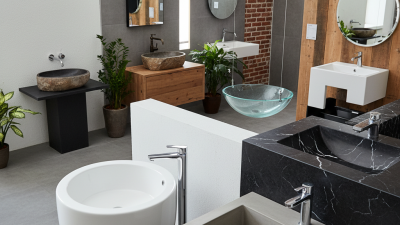
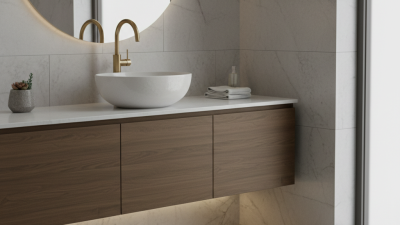
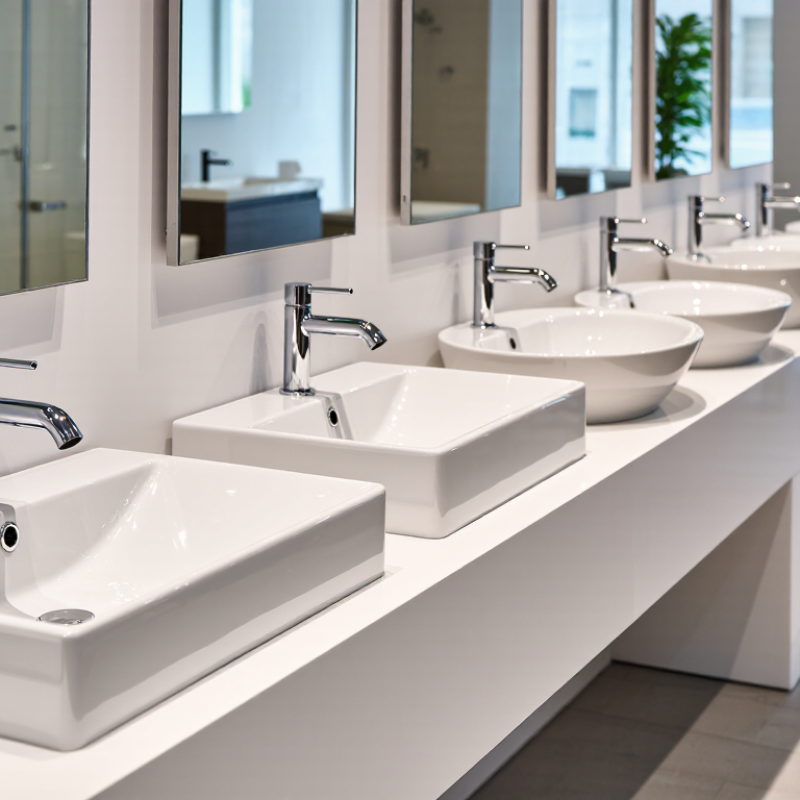
Choosing a hand basin starts with the room, not the catalogue. Wall-hung basins suit compact bathrooms because their clear floor area simplifies cleaning. Pedestal basins work well in residential renovations, although the pedestal can hide plumbing and reduce storage. Countertop and vessel basins create a stronger visual feature in hotels and apartments. Their raised rims, however, may challenge children and wheelchair users. Undermount basins provide a smooth countertop edge, making them practical for healthcare and high-use washrooms. Trough basins serve schools, factories, and public facilities where several users wash simultaneously. They need carefully planned tap spacing.
Material also affects the application. Vitreous ceramic offers a hard, non-porous surface for homes and hospitality settings. Stainless steel tolerates impact and frequent cleaning, making it suitable for transport hubs and commercial kitchens. Solid-surface basins allow integrated, joint-minimised designs, but heat and abrasive cleaners may cause damage. The WHO and UNICEF Joint Monitoring Programme reported that 2.3 billion people lacked basic hygiene services at home in 2022. That figure reinforces the importance of accessible, dependable wash points. For water efficiency, the U.S. EPA WaterSense programme limits certified bathroom sink faucets to 1.5 gallons per minute, compared with the common 2.2-gallon standard. Suppliers should also verify overflow protection, mounting strength, cleaning access, and relevant local standards. A beautiful basin can still fail in daily use. I would not select one from appearance alone.
Choosing a hand basin supplier requires more than comparing catalogue prices. Check the basin’s material, wall thickness, glaze quality, and drainage design. A strong manufacturer should explain these details clearly. Ask for product samples before placing a large order. Inspect the surface under bright light. Look for pinholes, uneven edges, stains, or weak fittings. These small flaws often become expensive after installation. Reliable suppliers should provide test reports, installation instructions, warranty terms, and clear production timelines. Their answers should be specific, not vague promises.
Tips: Request two or three references from similar projects. Confirm how replacement parts are handled. Ask whether packaging protects corners during transport. Compare the quoted price with delivery costs, installation needs, and expected service life. A low price may hide poor support. Also, check communication speed during the inquiry stage. Slow replies can create trouble when urgent parts are needed. No supplier is perfect. However, a dependable one admits limitations and offers practical solutions. A polished catalogue can still hide inconsistent quality control, so independent inspection remains worthwhile.
Evaluate production capacity carefully. Can the supplier maintain the same finish across repeated orders? Ask how defects are recorded and corrected. Review factory photos, quality procedures, and batch inspection records when available. Secure payment terms and written specifications reduce misunderstandings. It is also wise to test one basin in the intended room. Water flow, splash control, cleaning effort, and user comfort may differ from drawings. A basin that looks excellent online may perform poorly beside a narrow countertop.
When comparing top hand basin manufacturers and suppliers, judge quality beyond surface appearance. The U.S. Environmental Protection Agency reports that WaterSense-labeled bathroom faucets use no more than 1.5 gallons per minute, compared with the older 2.2-gallon standard. This can reduce faucet water use by more than 30%. Ask suppliers for flow-rate certificates, ceramic composition, glaze testing, and warranty terms. A glossy finish may look impressive, but uneven drainage or weak mounting hardware will quickly expose poor workmanship.
Design must fit real bathroom conditions. Measure the counter depth, tap position, waste outlet, and user clearance before comparing catalog prices. The National Kitchen & Bath Association’s design research continues to highlight accessibility and aging-in-place features, including easier reach and safer movement. Rounded edges, generous bowl depth, and an accessible installation height can improve daily use. However, attractive forms sometimes create narrow splash zones. That detail is easy to miss.
Pricing should include delivery, installation, replacement parts, and long-term cleaning effort. A 2024 industry report from Grand View Research identifies continued growth in bathroom fixtures, driven partly by renovation and water-efficiency demand. Market growth does not automatically mean better products. Compare material thickness, firing consistency, overflow design, packaging protection, and after-sales response. Request physical samples where possible. I have found that supplier promises can sound precise, yet technical documentation may remain vague. That deserves scrutiny. A cheaper basin is not economical if one damaged shipment or unavailable component creates a second purchase.
| Comparison Factor | Entry-Level Benchmark | Mid-Range Benchmark | Premium Benchmark | What to Verify with a Supplier |
|---|---|---|---|---|
| Basin Material | Vitreous china or standard ceramic | High-quality vitreous china, stainless steel 304, or standard solid surface | Stainless steel 316, engineered solid surface, or custom mineral composite | Material grade, composition, thickness, test reports, and resistance to staining, impact, and chemicals |
| Surface Finish | Basic glazed or brushed finish | Uniform glaze, satin finish, or fine brushed finish | Highly consistent non-porous finish with enhanced scratch and stain resistance | Color consistency, gloss level, coating thickness, cleanability, and quality-control samples |
| Wall Thickness and Durability | Suitable for light residential use | Reinforced construction for regular residential or commercial use | Heavy-duty construction designed for intensive public, healthcare, or hospitality use | Published dimensions, load rating, impact testing, reinforcement, and installation requirements |
| Standard Basin Width | Approximately 400–550 mm | Approximately 500–650 mm | Approximately 600–1,200 mm or made-to-order sizes | Overall width, bowl width, depth, mounting clearances, and compatibility with the countertop or wall structure |
| Bowl Depth | Approximately 100–150 mm | Approximately 140–190 mm | Approximately 170–220 mm, depending on application | Splash control, usable bowl area, drainage performance, and suitability for the intended users |
| Overflow Design | Standard overflow or no overflow, depending on model | Integrated overflow with accessible cleaning area | Optimized overflow design with concealed or hygienic channels | Overflow compliance, cleanability, odor prevention, and compatibility with the selected waste fitting |
| Water Efficiency | Depends mainly on the faucet; commonly paired with 5.7–8.3 L/min flow rates | Compatible with commonly specified 4.5–5.7 L/min commercial faucets | Designed for efficient drainage and compatibility with low-flow or sensor-operated faucets | Faucet flow-rate compatibility, splash performance, drainage speed, and applicable water-efficiency certifications |
| Accessibility | Basic installation; accessibility may require additional planning | Models available for accessible washrooms | Purpose-designed accessible configurations with concealed supports and improved knee clearance | Applicable local accessibility rules, rim height, knee clearance, pipe protection, and mounting support |
| Applicable Standards | Basic dimensional and plumbing requirements | Relevant plumbing-product standards and factory inspection records | Documented compliance with applicable regional standards, testing, and third-party certification | For example, ASME A112.19.2/CSA B45.1 or EN 14688 where applicable to the project location |
| Customization | Limited colors, tap-hole positions, and mounting options | Multiple sizes, tap-hole configurations, and selected finishes | Custom dimensions, integrated countertops, special finishes, and project-specific detailing | Minimum order quantity, tooling charges, sample approval, lead time, and tolerance control |
| Indicative Unit Price | Approximately US$40–120 | Approximately US$120–350 | Approximately US$350–1,200+ | Confirm whether the quotation includes waste fittings, brackets, faucets, packaging, freight, duties, and installation accessories |
| Typical Lead Time | Approximately 2–6 weeks for standard stock or production | Approximately 4–8 weeks, depending on finish and quantity | Approximately 8–16 weeks for customized or project-specific production | Production schedule, sample approval time, shipping method, and spare-parts availability |
| Warranty and Support | Usually 1–5 years for manufacturing defects | Usually 5–10 years for the basin, subject to terms and installation conditions | Extended product warranty, documented claims process, technical drawings, and replacement-part support | Warranty exclusions, claim response time, replacement policy, installation requirements, and after-sales service coverage |
Note: Price ranges and lead times are indicative market benchmarks for individual hand basins and can vary by material, size, order quantity, certification, region, shipping terms, and customization level.
Choosing the right hand basin supplier requires more than comparing catalogue prices. The WHO/UNICEF Joint Monitoring Programme reported that 2.3 billion people lacked basic hygiene services at home in 2022. This highlights the importance of dependable handwashing facilities, especially in schools, healthcare sites, and commercial buildings.
Check the supplier’s technical evidence before ordering. Ask for material specifications, test certificates, installation drawings, and cleaning instructions. Basin surfaces should resist staining, impact, and repeated disinfectant use. Confirm dimensions carefully; a difference of only 20 millimetres can affect countertop fitting and plumbing alignment. The U.S. Environmental Protection Agency’s WaterSense criteria limit bathroom sink faucets to 1.5 gallons per minute, so review the complete basin-and-tap system, not the basin alone. Local standards may differ.
Tips: Request a physical sample. Test drainage speed, overflow design, surface finish, and wall strength. Ask for replacement parts and a written warranty. Compare delivery records, packaging quality, and after-sales response times. A low quotation may hide fragile fittings or difficult maintenance. I have seen attractive installations fail because spare components were unavailable. That mistake is easy to underestimate. Also, do not accept certificates without checking their issuing body and validity. A supplier with clear documentation is usually safer than one offering impressive promises. Still, even reliable suppliers can miss project details, so confirm every measurement in writing before production.
Use these ADA dimensional benchmarks when comparing hand basin suppliers for accessible commercial or public installations. A suitable supplier should provide products that meet the required dimensions and local building codes.
Dimensions are based on the 2010 ADA Standards for Accessible Design, Section 606. Always verify local regulations, installation conditions, material quality, warranty coverage, and delivery capability before selecting a supplier.