How to Choose the Best Ceramic Toilet for Your Bathroom Needs?
Choosing the right Ceramic Toilet for your bathroom can be overwhelming. Many options exist, and each has unique features. You may wonder which style fits your needs best.
A good Ceramic Toilet combines comfort, functionality, and aesthetics. Consider your bathroom size and layout when making this choice. A compact model might work well in a smaller space, while a larger one could enhance a spacious bathroom.
Think about the design too. A sleek ceramic finish can elevate your bathroom's look. However, you should also reflect on ease of cleaning, as some designs collect grime more easily than others. It's essential to balance style with practicality.
Understanding the Benefits of Ceramic Toilets for Bathrooms
Ceramic toilets are a popular choice for many bathrooms. They offer several benefits that enhance both functionality and aesthetics. One key advantage is their durability. Ceramic is resistant to scratches and stains, making it a long-lasting investment. The sleek surface of ceramic also makes it easy to clean, reducing the time spent on maintenance.
Another benefit is the variety of designs available. From modern to traditional, ceramic toilets can fit into any bathroom style. Their glossy finish adds a touch of elegance that can elevate the overall look of your space. However, it’s essential to consider the weight of ceramic toilets. They can be heavier than other materials, which may complicate installation.
Ceramic toilets also provide excellent water efficiency. Many models are designed to use less water without sacrificing performance. This feature can lead to significant savings on water bills. However, it’s crucial to ensure compatibility with your plumbing system. Not all toilets will fit every bathroom layout. Reflecting on these factors can help you make a more informed choice.
Benefits of Ceramic Toilets
This chart illustrates the benefits of ceramic toilets based on a rating scale from 1 to 10. The ratings represent the qualitative assessment of each benefit that ceramic toilets provide, such as durability, ease of cleaning, aesthetic appeal, water efficiency, and cost-effectiveness.
Factors to Consider When Choosing a Ceramic Toilet
Choosing a ceramic toilet is not just about style. Different factors can greatly impact your decision. Start with the size of your bathroom. Measure the available space carefully. A compact toilet may be ideal for small bathrooms. Larger spaces can accommodate more elaborate designs.
Next, consider the bowl shape. Round bowls save space and are often less expensive. Elongated bowls offer more comfort but require more room. Think about water efficiency as well. Some toilets use less water per flush, which can save money over time. However, higher efficiency models may not always perform well.
Don’t overlook the height of the toilet. Standard heights suit most, but comfort height options are available for taller individuals. This can make a big difference in comfort. Finally, finish and color matter too. A classic white toilet fits many styles. But unique colors can add a personal touch. Take time to weigh these options carefully. Ensuring the right fit is vital.
How to Choose the Best Ceramic Toilet for Your Bathroom Needs?
| Feature |
Description |
Importance |
| Bowl Shape |
Elongated vs. Round |
Affects comfort and space usage |
| Height |
Standard vs. Comfort Height |
Crucial for accessibility |
| Flush Type |
Single flush vs. Dual flush |
Impacts water efficiency |
| Material Quality |
Ceramic grade and finish |
Durability and ease of cleaning |
| Water Usage |
Gallons per flush |
Environmental and cost concern |
| Design Style |
Modern vs. Traditional |
Affects bathroom aesthetics |
| Warranty |
Manufacturer's warranty length |
Indicates quality and reliability |
Types of Ceramic Toilets: One-Piece vs. Two-Piece
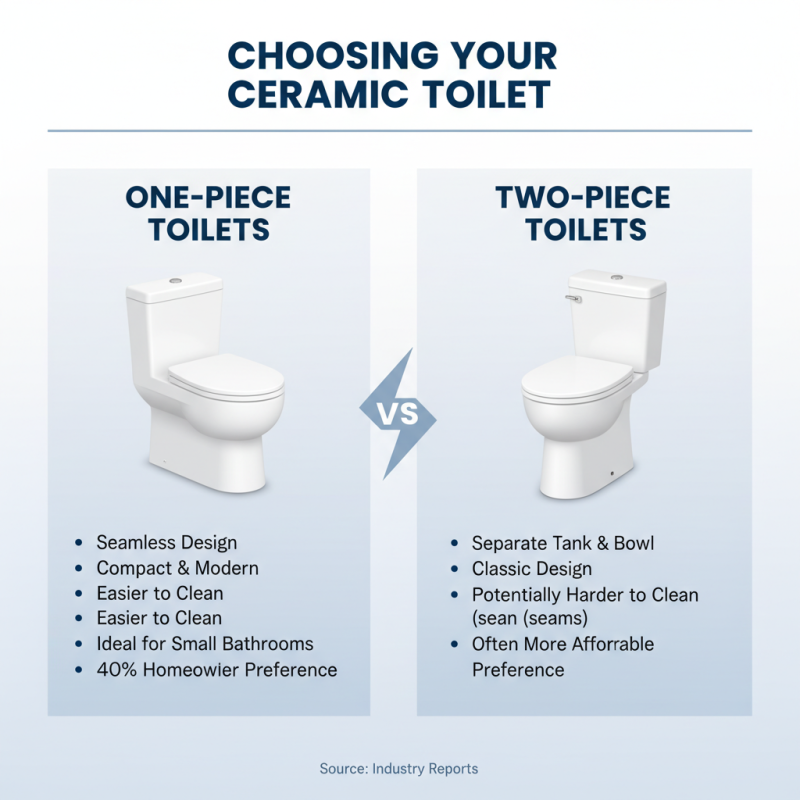
Choosing the right ceramic toilet involves understanding the differences between one-piece and two-piece designs. One-piece toilets are compact and cleaner, as they have a seamless design. This can be appealing for smaller bathrooms where space is limited. According to industry reports, about 40% of homeowners prefer one-piece models due to their modern aesthetics and ease of cleaning.
On the other hand, two-piece toilets are more traditional and often more affordable. They consist of two separate parts: the bowl and the tank. This design allows for easier transport and installation, which may be beneficial for DIY enthusiasts. However, the joint between the tank and bowl can sometimes lead to leaks over time. Reports indicate that over 30% of users encounter some issues with this particular design, which can be an important consideration.
Ultimately, both designs have unique benefits and potential drawbacks. One-piece toilets may be difficult to repair if something goes wrong, as the entire unit must be replaced. Two-piece toilets might require more frequent maintenance due to their connections. Assessing your bathroom's specific needs can guide you toward the best choice for your situation. Always consider factors like water efficiency, comfort, and your budget before making a decision.
Essential Features to Look for in a Quality Ceramic Toilet
When selecting a ceramic toilet, essential features play a crucial role in meeting your bathroom needs. Look for a bowl height that suits your comfort. Standard heights are around 15 inches, while comfort heights are about 17 to 19 inches. A higher bowl can be easier for older adults and people with mobility issues. According to industry reports, nearly 25% of households prefer comfort height toilets for better accessibility.
Water efficiency is another critical factor. The best models use 1.28 gallons per flush (GPF) or less. Products that meet the U.S. Environmental Protection Agency's WaterSense criteria can save significant water. This can lead to an annual savings of about $100 on water bills in a typical household. However, it’s important to note that this might compromise flushing power in some models. Evaluate the trade-off between efficiency and performance carefully.
Consider the flushing mechanism as well. Gravity-fed systems are common but may not always be reliable, especially in low-flow models. Pressure-assisted systems offer more power but can be noisier. Aesthetic features, like the shape and finish, also matter. Many homeowners prefer sleek designs that complement modern bathrooms. Yet, intricate designs can be harder to clean, requiring more maintenance. Balancing function, efficiency, and style is essential in your decision-making process.
How to Properly Maintain and Care for Your Ceramic Toilet
Maintaining a ceramic toilet requires attention and care. Regular cleaning is essential to avoid stains and bacteria buildup. Use a gentle cleaner to avoid damaging the ceramic surface. Scrub the bowl with a soft brush, focusing on hidden spots. A clean toilet can enhance the overall look of your bathroom.
Tips: Always wear gloves when cleaning. This keeps your hands safe from harsh chemicals.
Check for leaks regularly. Simple inspections can save you from costly repairs. Common signs include a running toilet or water pooling around the base. If you notice these issues, act quickly. Delaying repairs only makes things worse.
Tips: Keep a close eye on the water level in the tank. Adjust it if necessary.
Lastly, avoid flushing inappropriate items. This simple action prevents clogs and maintains your toilet's efficiency. Items like wipes and paper towels can cause major issues. Education on proper usage is key to longevity.
Tips: Place a small sign near the toilet as a reminder. It’s a minor step that can have a big impact.