
Leave Your Message

How to Choose the Best Bathroom Mirror in 2026?

Choosing the best Bathroom Mirror in 2026 starts with the room, not the trend. Measure the available wall space, then consider who uses the mirror and what they need to see. A wide mirror can make a compact bathroom feel brighter, while a smaller model may suit a narrow vanity better. Check the mirror’s width against the sink and leave enough clearance for taps, cabinets, and nearby lighting. Small details matter.

Lighting deserves careful attention. A mirror with integrated illumination can help with grooming, but brightness, color temperature, and switch placement affect everyday comfort. If the bathroom is dim, compare the mirror’s specifications with your existing lights rather than assuming built-in LEDs will solve everything. Look for clear information about moisture resistance, cleaning, warranty coverage, and installation. For electrical work, follow the manufacturer’s instructions and use a qualified professional when needed. Safety is not a style choice.

Your choice also depends on how you live. A heated mirror can reduce fog after a hot shower, while storage behind a mirrored cabinet may help keep toiletries off the counter. Yet extra features add cost and can make repairs more complicated. It is easy to overvalue a sleek display and overlook whether it fits your routine. I would pause over that trade-off. Compare dimensions, materials, and service details from reliable product documentation, and check whether the design works with your existing bathroom. A beautiful mirror should be useful on an ordinary morning, not just in a showroom. Even careful plans need a second look.
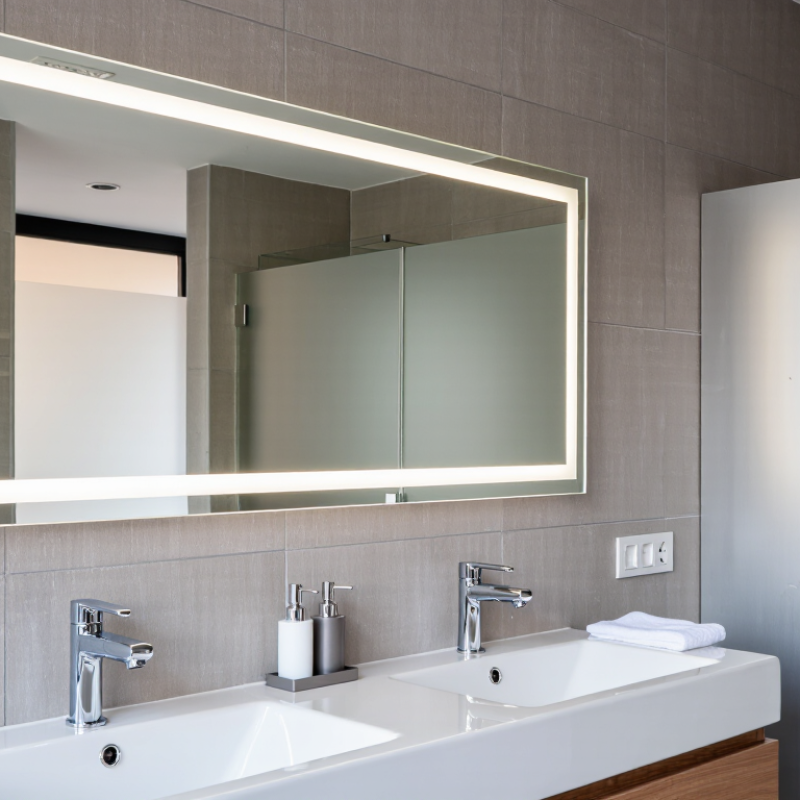
How to Choose the Best Bathroom Mirror in 2026?

Define Your Bathroom Mirror Needs and Daily Uses

Before comparing shapes or finishes, map the mirror to your actual morning routine. Do you shave, apply makeup, style your hair, or help a child brush their teeth? Each task needs a different viewing distance and amount of light. A wide mirror helps two people share a vanity, while a magnifying panel can make detailed grooming easier. Measure the sink and wall, then check whether everyone can see their face without leaning forward. Small detail. That awkward stretch over a faucet gets old quickly.

Lighting deserves equal attention. If the bathroom has one dim ceiling fixture, a mirror with integrated lighting may reduce shadows around the face. The U.S. Department of Energy’s Energy Saver guidance says LED bulbs use at least 75% less energy than incandescent bulbs and can last up to 25 times longer. That makes efficient lighting worth considering, though brightness and color still matter for daily tasks. Check whether the controls are easy to reach with wet hands, and whether the mirror’s size leaves room for a towel bar or cabinet. Honestly, a mirror with every feature can still feel wrong if it crowds the sink. Decide which two or three uses matter most, then choose around those.

Measure the Wall and Select an Appropriate Mirror Size

Before shopping, measure the usable wall, not just the vanity. Record its width and height, then note nearby lights, cabinets, and the backsplash. Measure from the faucet to the bottom edge you have in mind. Painter’s tape can outline the proposed mirror on the wall. Stand back and check whether it feels balanced from the doorway and at the sink. Small gaps matter.

For a single sink, a mirror about 70 to 90 percent of the vanity’s width often looks proportionate. A 36-inch vanity, for example, could pair well with a mirror roughly 25 to 32 inches wide. This is a starting point, not a rule. A narrow wall or off-center light may call for a different size. With two sinks, check whether one broad mirror or two separate mirrors fit the available wall without crowding the fixtures.

Choose the height by checking who will use the bathroom and where the lights sit. Leave enough room above the faucet, and make sure taller users can see comfortably. Mark the mirror’s top and bottom edges before drilling. I can see why this step gets rushed: a paper sketch may look perfect, while the actual wall feels tighter. Recheck your measurements, including the mirror’s frame and mounting hardware.

Compare Mirror Types, Shapes, and Smart Features

How to Choose the Best Bathroom Mirror in 2026?

A bathroom mirror should suit the room’s light, daily routine, and wall space—not just its style. A framed mirror adds definition and can soften a plain tile wall. A frameless design feels lighter and pairs easily with varied finishes. In a shared bathroom, a wide mirror may help two people get ready without crowding the sink. Measure the vanity and leave practical clearance around taps and lights. Small mismatch, big annoyance.

Tips: Stand at the sink and check the mirror from your usual position. Choose a shape that works with the vanity: round mirrors soften angular rooms, while rectangular ones offer more viewing area. Confirm lighting and installation requirements before buying.

Smart features matter when they solve a real problem. Built-in LEDs can provide even light for shaving or makeup. Check the color temperature and brightness controls; cool light can feel harsh in a small room. An anti-fog pad is useful after a hot shower, though it may take time to clear the center. Touch controls and clocks look convenient, yet extra features mean more parts to clean or troubleshoot. Check the mirror’s bathroom suitability and follow its installation instructions. Ask a qualified installer if wiring is involved. There’s no universal best. A mirror that fits your habits usually wins, even if its shape is not the trendiest.

Assess Lighting, Materials, Safety, and Energy Use

Choose lighting by the work you do at the mirror. For shaving or makeup, even light across the face helps reveal detail without harsh shadows. A color rendering index of 90 or higher can make skin tones look more natural. Check the mirror at different times of day. Warm bulbs may feel calm at night but distort colors in daylight. Small details matter.

Moisture tests a mirror’s edges and backing over time. Look for sealed edges and materials intended for humid rooms, then check the care instructions. Large mirrors need secure fixings suited to the wall, not just their weight on paper. If the mirror sits near a bath or shower, consider rounded corners and safety-backed glass. Electrical installation rules vary by location, so have a qualified electrician assess powered mirrors. I would not assume a mirror is safe just because it is labeled for bathrooms.

Energy use depends on more than the light’s stated wattage. Compare brightness and efficiency, and consider dimming or a timer for lights that are often left on. A demister pad is convenient after a hot shower, but it adds power use; a switch or timer can limit its run time. Replaceable lighting may be easier to maintain than an all-in-one unit. The neatest-looking option is not always the easiest to repair.

Check Installation Requirements and Long-Term Maintenance

A bathroom mirror should fit the wall and the way the room is used. Measure the vanity, available wall space, and distance from taps before choosing a size. A mirror that looks balanced in a showroom may feel oversized above a narrow basin. Check the product’s weight against your wall type, and use fixings suited to plasterboard, masonry, or timber studs. Small details matter. Leave room for doors, lights, and shelves to open or sit comfortably.

For a lighted or heated mirror, confirm the required wiring, power access, and installation clearances before ordering. Bathroom electrical requirements vary by location, so have a qualified electrician check the plan and local rules. Do not assume an existing outlet is in the right place. It may not be. Also ask whether the mirror can be removed for future repairs; a sealed unit can complicate access.

Long-term care depends on the finish and the room’s ventilation. Wipe glass with a soft, non-abrasive cloth, and dry the lower edge after heavy splashing. Harsh cleaners can damage coatings or metal trim. Check seals and mounting points occasionally, especially in a humid room. Even a careful plan can miss something: cleaning access is easy to overlook until the mirror is installed.

How to Choose the Best Bathroom Mirror in 2026? - Check Installation Requirements and Long-Term Maintenance

Mirror Type Installation Requirements Space and Wall Checks Long-Term Maintenance Best Suited For
Standard wall mirror Use the supplied mounting hardware or hardware rated for the mirror’s weight. Fasten into a stud where possible; use suitable masonry anchors for solid masonry walls. Check the mirror’s width against the vanity and leave room for faucets, lights, and cabinet doors. Confirm the wall is flat and the fixing points are level. Clean with a soft, lint-free cloth and a non-abrasive glass cleaner. Avoid letting liquid sit on the mirror’s edges or backing. Simple bathroom layouts where a clear reflective surface and straightforward installation are priorities.
Framed mirror Check the hanging method and total weight, including the frame. Use fixings appropriate to the wall material and avoid relying on drywall alone unless the hardware is specifically rated for it. Allow clearance for the frame around nearby lights, taps, and shelving. Confirm that the frame will not obstruct cabinet doors or wall fittings. Wipe the glass with a soft cloth. Clean the frame according to its material; dry wood and metal promptly if they become wet. Bathrooms where a defined decorative edge is desired and there is enough wall space for the frame.
LED mirror For a hardwired model, use a qualified electrician and follow the product instructions and local bathroom electrical regulations. Confirm the required supply, switch arrangement, and any specified protection rating before purchase. Check the location of the power connection, wall cavity, and mounting brackets. Make sure the mirror can be removed for future servicing if the design requires it. Switch off power before cleaning. Use a soft cloth and avoid spraying cleaner into switches, seams, or electrical components. Follow the manufacturer’s care instructions. Bathrooms where integrated task lighting or a backlit appearance is useful.
Recessed medicine-cabinet mirror Verify that the wall cavity can accommodate the cabinet and that it contains no conflicting pipes, cables, or structural members. Recessing or altering a wall may require professional assessment. Measure the cavity, cabinet depth, door swing, and clearance from taps and light fixtures. Surface-mounted versions need enough projection clearance. Clean the mirror and cabinet interior with suitable non-abrasive products. Keep hinges dry and check them periodically for looseness. Smaller bathrooms where concealed storage is more valuable than a flat mirror profile.
Magnifying mirror Choose a mounting position that allows the arm or swivel mechanism to move freely. Use wall fixings suitable for the wall type, or follow the instructions for a countertop model. Check reach from the sink and ensure the extended arm will not strike a door, cabinet, or other fitting. Select magnification and mirror size for the intended viewing distance. Clean both sides gently and dry the pivot points if they get wet. Do not use abrasive pads that can scratch the reflective surface. Close-up grooming tasks, especially when mounted within comfortable reach of the sink.
Large or full-width mirror Confirm the combined weight and use a mounting system suitable for the mirror’s dimensions. Large, heavy, or glass-to-wall installations are best assessed and fitted by an experienced installer. Measure the full wall area, outlet and light positions, and the distance from the basin. Check access routes and handling space before delivery. Clean with a soft cloth and inspect exposed edges periodically. Prevent water from collecting behind the mirror or along unsealed edges. Double vanities or bathrooms where a broad reflective surface helps make the room feel more open.

Before buying: Measure the available wall area and check the mirror’s weight, fixing method, and any electrical requirements. Bathroom electrical rules and permitted installation locations vary by jurisdiction, so follow local regulations and the product instructions.