2026 How to Choose the Best Dual Flush Toilet for Your Home?
Choosing the right toilet for your home can feel overwhelming. Among the many options, the Dual Flush Toilet stands out for its efficiency. This type of toilet allows users to select between two flush options, saving water without compromising performance.
When selecting a Dual Flush Toilet, consider various factors. Look for designs that seamlessly blend functionality with aesthetics. Flush power is crucial; a weak flush can lead to clogs. Additionally, the ease of installation and maintenance should not be overlooked. These toilets come in various styles and features. It's essential to read reviews and experiences shared by other homeowners.
Remember, not all dual flush models are created equal. Some may not effectively clear waste, even with dual options. Delve into the specifics of each model. Take the time to analyze water-saving certifications and consumer feedback. Investing in a reliable dual flush toilet can significantly reduce your water bill, but only if chosen wisely.
Understanding Dual Flush Toilets: Benefits and Features
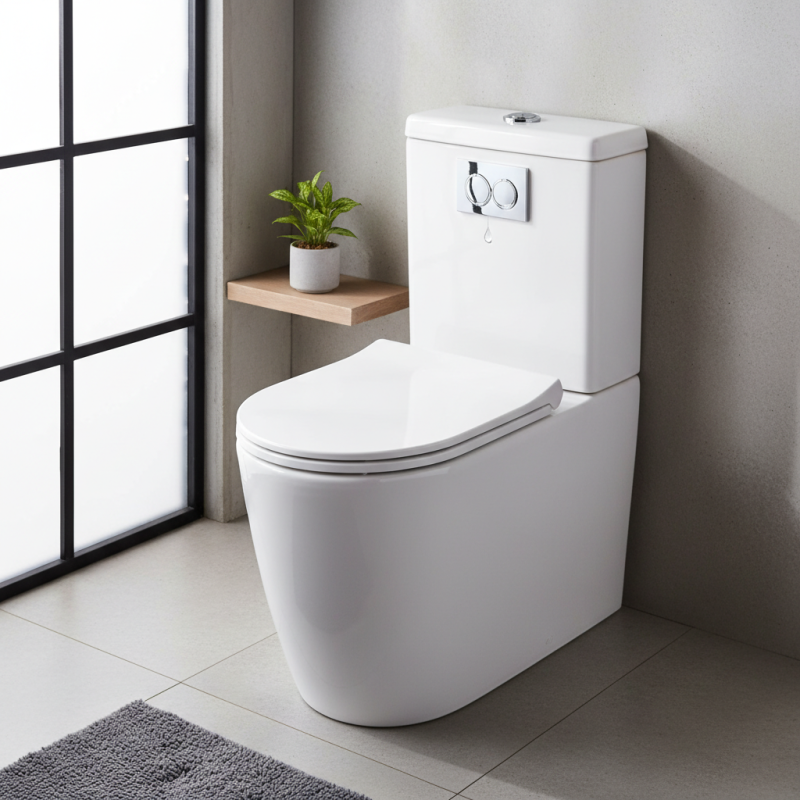
Dual flush toilets are an innovative solution designed to save water. They typically feature two buttons: one for liquid waste and another for solid waste. This design allows users to choose the appropriate flush, reducing water usage significantly. In many households, this can lead to savings on water bills and a positive environmental impact.
The benefits of dual flush toilets extend beyond water conservation. They often have sleek designs, fitting well in modern bathrooms. Installation is usually straightforward, and many models come with features like quiet flush mechanisms and easy-to-clean surfaces. However, it’s essential to consider that not all models are equal in performance. Some may require more maintenance or have issues with clogging.
When choosing a dual flush toilet, consider personal preferences and bathroom space. Look for user reviews and ratings to gauge reliability. It’s critical to assess the flushing power, especially if you have a high-capacity household. Not all dual flush systems perform effectively under heavy use. Thus, thoughtful selection can lead to lasting benefits and satisfaction.
Key Factors to Consider When Choosing a Dual Flush Toilet
When selecting a dual flush toilet, several key factors warrant careful consideration. Water efficiency stands out as a primary concern. According to the Environmental Protection Agency, toilets account for nearly 30% of residential water use. Choosing a dual flush model can lead to significant water savings. These toilets typically use 1.1 gallons per flush for liquid waste and 1.6 gallons for solid waste. This design can save a family of four up to 16,000 gallons of water annually.
Next, consider the flushing performance. Not all dual flush toilets have equal flushing power. Look for models certified by the MaP Testing program, which evaluates toilets based on their waste removal efficiency. A quality toilet should handle at least 1,000 grams of waste in one flush. Pay attention to the bowl shape as well; elongated bowls tend to offer more comfort. However, they might require more space, which could be a limiting factor in smaller bathrooms.
Installability is another crucial factor. Some models may require additional plumbing adjustments or new fixtures, leading to higher installation costs. Furthermore, while dual flush systems promise efficiency, they can sometimes be less intuitive for users unfamiliar with the buttons, leading to potential frustrations. Balancing efficiency, comfort, and usability can ensure a smarter choice for your home.
How to Choose the Best Dual Flush Toilet for Your Home? - Key Factors to Consider When Choosing a Dual Flush Toilet
| Factor |
Description |
Importance Level |
| Water Efficiency |
Look for toilets that use 1.6 gallons per flush or less to save water and reduce bills. |
High |
| Flush Performance |
Choose a model with strong flush performance to ensure waste removal and avoid clogs. |
High |
| Design & Style |
Select a toilet that complements your bathroom's aesthetics; available in various styles. |
Medium |
| Cost |
Consider your budget; high-quality models may have a higher upfront cost but save water. |
High |
| Installation |
Check if the model is easy to install or if professional installation is recommended. |
Medium |
| Warranty |
Refer to the warranty period offered; a longer warranty can indicate quality. |
Medium |
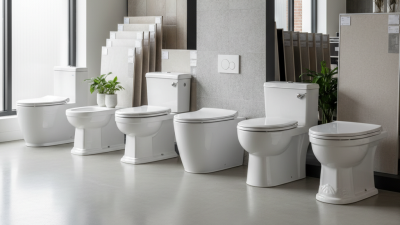
Types of Dual Flush Toilets: Comparison of Designs and Mechanisms
When choosing a dual flush toilet, understanding the different designs and mechanisms is crucial. Dual flush toilets typically feature two buttons: one for liquids and another for solids. This unique mechanism can save significant water, with reports indicating potential savings of 20% to 60% in water usage. Research shows that a conventional toilet uses about 3.6 gallons per flush, while a dual flush toilet can use as little as 0.8 gallons for liquid waste.
There are several designs available. Gravity-fed models leverage gravity to flush waste, making them reliable and straightforward. Pressure-assisted toilets use compressed air to enhance the flush, providing a powerful action that can reduce clogs. However, they can be noisier. While considering aesthetics, the shape and configuration of a bowl also play a role in overall performance. Many homeowners have found that comfort height toilets improve usability. However, high-quality models may come with a higher upfront cost, requiring thoughtful consideration of long-term savings.
In evaluating options, research shows that toilet design affects flushing efficiency. Some models may require more maintenance due to complex mechanisms. A feedback loop involving either customer reviews or mechanical performance reports can provide insight into potential issues. Choosing the right dual flush toilet involves weighing water-saving benefits against initial investment and ongoing maintenance concerns.
Water Efficiency Ratings and Their Importance for Savings
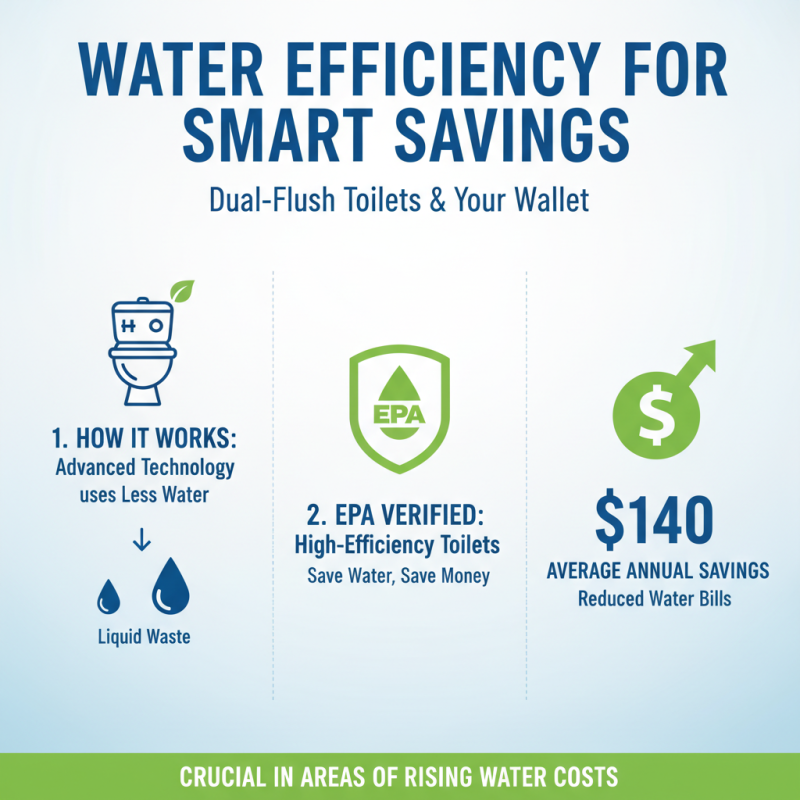
When selecting a dual flush toilet, understanding water efficiency is crucial for savings. Water-efficient toilets utilize advanced technology to minimize water usage while maintaining effective flushing power. According to the Environmental Protection Agency (EPA), adopting high-efficiency toilets can save families approximately $140 a year on their water bills. This is significant, particularly in regions where water costs are rising.
Dual flush toilets come with two flushing options: a low-volume flush for liquid waste and a full-volume flush for solid waste. This feature varies by model, but generally, dual flush toilets use 1.6 gallons per flush (gpf) for solids and as low as 0.8 gpf for liquids. The WaterSense label indicates models that meet water-saving criteria established by the EPA. A 2018 report indicated that homes with WaterSense fixtures used roughly 20% less water than those without them.
However, the choice is not always straightforward. Some models may have poor performance despite their water-saving claims. It is essential to check user reviews and independent testing results. Pay attention to common issues such as clogs or inconsistent flushing. Efforts to balance efficiency with effectiveness need care. Practical experience reveals that not all eco-friendly options perform equally well.
Installation and Maintenance Tips for Dual Flush Toilets
Installing a dual flush toilet can enhance water efficiency in your home. Before installation, ensure you have all necessary tools ready. Common tools include a wrench, screwdriver, and level. Follow the manufacturer’s instructions carefully, as each model may have unique requirements. Proper alignment is crucial to prevent leaks later.
Maintenance is essential for optimal performance. Regularly check the flushing mechanism. Sometimes, parts may wear out and require replacement. Inspect for leaks or noises that indicate a malfunction. A tight seal on the tank prevents water loss. Use a mild cleaner for the bowl to avoid damaging the finish.
Don't hesitate to consult a plumber for tricky issues. Some problems might seem minor but can escalate. Take maintenance seriously to ensure longevity. Maintaining your dual flush toilet can save you money and contribute to eco-friendliness in your home. Regular upkeep leads to a more reliable fixture.
2026 Dual Flush Toilet Comparison
This bar chart compares various aspects of dual flush toilets, including flushing performance, water efficiency, price, installation ease, and maintenance requirements. Each dimension is rated on a scale from 1 to 10, providing a clear overview of what to consider when choosing the best dual flush toilet for your home.